
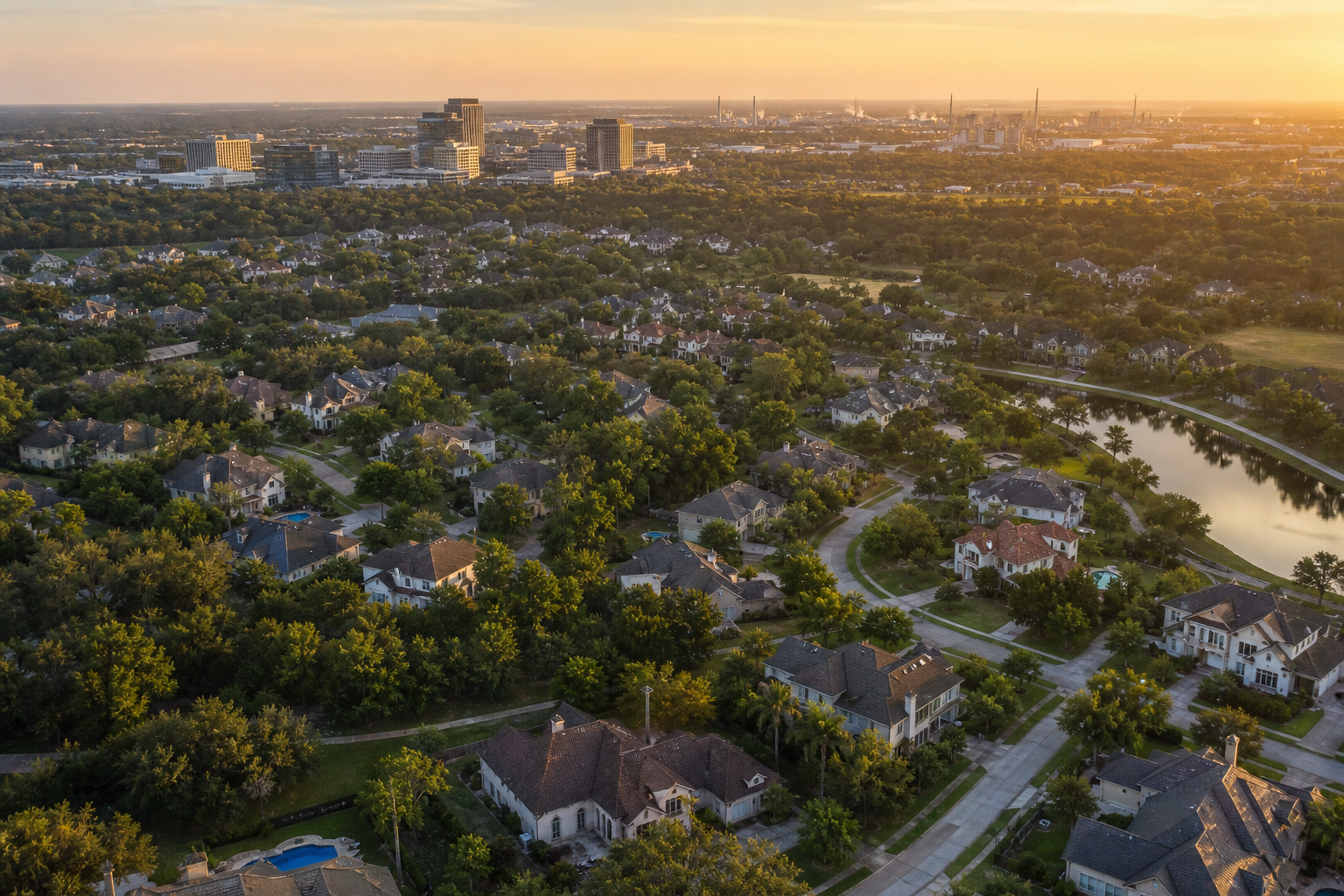
Houston’s Energy Corridor is a live-work community along I-10 West with more than 56,000 local jobs, a median sold price of $542,030 as of May 2026, and 3.6 months of inventory, making it a seller’s market with real opportunity for buyers who move decisively.
What is it actually like to live in Houston’s Energy Corridor?
Living in Houston’s Energy Corridor means waking up minutes from one of the largest concentrations of energy-sector jobs in the country, in a neighborhood that has grown steadily into a genuine live-work community rather than just a corporate office park. As of May 2026, the submarket carries a median sold price of $542,030, 3.6 months of inventory, and a daytime population that swells to around 73,000 people, all signs of a neighborhood with real economic momentum.
Key Takeaways
- The Energy Corridor’s median sold price was $542,030 in May 2026, according to the Houston Association of Realtors, with homes averaging 42.1 days on market.
- The submarket carried 3.6 months of inventory in May 2026, a seller’s market, with listings down 18.5% year over year.
- More than 56,000 local jobs are anchored by employers including bp, Shell, ConocoPhillips, Baker Hughes, CITGO, Enbridge, and Fluor, making short commutes a real lifestyle benefit for residents.
- The Energy Corridor Management District reports 13,614 residents with projections to exceed 14,000 by 2030, confirming steady residential growth alongside its commercial profile.
- Residents report an average annual income of approximately $106,000, supporting strong demand for housing, dining, and retail in the district.
Why do people choose to live in the Energy Corridor rather than just work there?
That’s the question I hear most often from buyers who are relocating for energy-sector roles and weighing whether to live inside the district or commute from somewhere like Katy or Sugar Land. The honest answer is that the Energy Corridor has quietly built the kind of neighborhood infrastructure that makes living here genuinely convenient, not just geographically close to work.
According to the Energy Corridor Management District, the area is home to 13,614 residents, with projections to exceed 14,000 by 2030. That’s steady, intentional residential growth. The district also reports an average annual income of approximately $106,000 among residents, which tells you something about who’s buying and renting here and why the local retail and restaurant scene keeps expanding to meet that demand.
The geographic footprint spans West Houston along I-10 (the Katy Freeway), roughly between Highway 6 and Eldridge Parkway, touching ZIP codes 77077, 77079, 77094, and 77042 depending on the source. That puts residents within a short drive of the Westheimer corridor, CityCentre, and Memorial City, giving the neighborhood a lot of retail and dining depth without requiring a trip into the urban core.
The employers that make this a live-work neighborhood
The Energy Corridor Management District’s employer list reads like a who’s-who of global energy: bp, Shell, CITGO, ConocoPhillips, Baker Hughes, Enbridge, and Fluor all maintain major offices or headquarters here. Together, these companies and the businesses that support them account for more than 56,000 local jobs, and the district’s daytime population reaches roughly 73,000 people.
For an engineer, project manager, geoscientist, or finance professional working in energy, living in the Energy Corridor can mean a five-minute commute instead of forty-five. That’s not a small thing. I’ve worked with buyers who specifically targeted this submarket because eliminating a long I-10 commute was worth paying a premium over comparable homes further west.
What the neighborhood actually feels like day to day
The rhythm of the Energy Corridor shifts noticeably by time of day. During office hours, the major corridors near the corporate campuses carry predictable commuter traffic. By evening and on weekends, the energy shifts to parks, shopping centers, and restaurants. The area around Terry Hershey Park, which runs along Buffalo Bayou in this part of West Houston, draws runners, cyclists, and families throughout the week, it’s one of the more underrated green spaces in the greater Houston area.
The mix of corporate scale and neighborhood feel is what surprises most buyers I bring through here for the first time. It doesn’t feel like you’re living inside an office park. The residential streets have real character, and the proximity to Memorial and the Katy area gives you options in every direction.
What does the Energy Corridor housing market look like heading into fall 2026?
The most recent data available comes from the Houston Association of Realtors May 2026 Energy Corridor market update, which characterizes the submarket as a seller’s market with 3.6 months of inventory. Listings were down 18.5% year over year at that point, meaning buyers had fewer choices than they did twelve months earlier.
The median sold price in May 2026 was $542,030, and homes averaged 42.1 days on market. That’s a moderately brisk pace, not the frantic multiple-offer environment of peak pandemic years, but competitive enough that well-priced, well-located homes don’t sit. Buyers who understand the inventory constraints going in are the ones who move decisively when the right property comes up.
| Market Metric | Energy Corridor (May 2026) |
|---|---|
| Median Sold Price | $542,030 |
| Months of Inventory | 3.6 months (seller’s market) |
| Average Days on Market | 42.1 days |
| Listings Change (YoY) | Down 18.5% |
| Daytime Population | ~73,000 |
| Local Jobs in District | 56,000+ |
It’s worth noting that these figures reflect May 2026 conditions, per HAR’s geo-market reporting. Market conditions can shift between reporting periods, and your specific situation, price point, property type, timing, shapes what you’ll actually experience. That’s exactly the kind of thing I work through with buyers before we start touring.
What about rentals in the Energy Corridor?
For buyers weighing a purchase against renting while they explore the area, Realtor.com’s 2025 Energy Corridor housing snapshot showed a median rent of approximately $1,587 per month, with rent down about 3.6% year over year at that time. That data reflects 2025 through early 2026 conditions, so treat it as a directional reference rather than a current quote. For many buyers at the $542,000 median price point, the rent-versus-own math leans toward ownership, especially with the job stability that comes from working for a major energy company nearby.
What should buyers know before making an offer in the Energy Corridor?
A few things I tell every buyer I work with in this submarket, because they come up consistently.
Inventory is the real constraint. With listings down nearly 19% year over year as of May 2026, you’re not shopping in a market with endless options. When a property checks your boxes, waiting to see if something better comes along often means losing the one you wanted. I’ve seen that play out more than once in West Houston.
The live-work value proposition is real, but personal. The short commute to major energy employers is a genuine lifestyle benefit, but only if your employer is actually in the district. If you’re working at the Texas Medical Center or downtown, the calculus changes, and we’d want to think through whether the Energy Corridor’s location still makes sense for you or whether somewhere like Friendswood or League City on the south side might serve you better.
Closing in Houston runs through a title company. When you buy here, your closing will be coordinated by a local title company, which handles escrow, document recording with Harris County, payoff of any existing liens, and issuance of title insurance under Texas Department of Insurance regulations. Your agent will typically recommend a title company familiar with West Houston subdivisions. Allocation of specific costs between buyer and seller is negotiable in the contract, there’s no Texas statute that fixes who pays what, so the terms depend on what you negotiate.
Your specific numbers require a real conversation. The median sold price gives you a market anchor, but what you’ll actually pay depends on the specific property, its condition, location within the district, and how the current inventory looks when you’re ready to move. I run a personalized market analysis for every buyer I work with before we start making offers, it’s the only way to go in with confidence.
FAQ: Living and Buying in Houston’s Energy Corridor
Is the Energy Corridor a good place to live if I work in the energy industry?
Yes, it’s one of the most practical live-work locations in Houston for energy professionals. With more than 56,000 local jobs and major employers like bp, Shell, ConocoPhillips, Baker Hughes, and Fluor all headquartered or operating within the district, many residents live within a five- to ten-minute drive of their office. That commute advantage, combined with the area’s amenities and housing quality, is a consistent reason buyers in the energy sector target this submarket specifically.
Is the Energy Corridor a buyer’s or seller’s market in 2026?
Based on the most recent available data, the May 2026 HAR Energy Corridor market update classified it as a seller’s market, with 3.6 months of inventory and listings down 18.5% year over year. Homes averaged 42.1 days on market and a median sold price of $542,030. Buyers can still find good properties, but limited supply means acting decisively matters more here than in slower markets.
What parks and outdoor amenities are near the Energy Corridor?
Terry Hershey Park, which follows Buffalo Bayou through this part of West Houston, is the district’s signature green space and offers miles of trails popular with runners, cyclists, and walkers. The broader Memorial area also puts residents within reach of Memorial Park, one of Houston’s largest urban parks. These outdoor amenities are a meaningful quality-of-life feature for residents who want access to nature without leaving the west side of the city.
What does a title company do when I buy a home in the Energy Corridor?
In Houston and across Harris County, residential closings are handled by a title company rather than an attorney. The title company holds funds in escrow, coordinates payoff of the seller’s existing mortgage, records the deed and other documents with the Harris County Clerk, and issues title insurance policies for both the lender and the buyer. Your agent will typically recommend a title company experienced with West Houston properties, and the specific allocation of costs between buyer and seller is negotiated in your purchase contract.
How does the Energy Corridor’s residential population compare to its daytime workforce?
The contrast is significant. According to the Energy Corridor Management District, the area has approximately 13,614 residents, but the daytime population swells to around 73,000 due to the large workforce employed in the district. That ratio reflects the Energy Corridor’s identity as primarily an employment center that is steadily building out its residential base, with projections to exceed 14,000 residents by 2030.
The Energy Corridor is one of those Houston submarkets where the numbers and the lifestyle story line up in a way that’s genuinely compelling for the right buyer. If you’re relocating for an energy-sector role, or you’re already in Houston and want to cut your commute while upgrading your home, this is a market worth looking at seriously.
I’d be glad to walk you through what’s available right now and what the data means for your specific situation. Call me at 281-900-9663 or search current Energy Corridor listings to start exploring your options.
Equal Housing Opportunity. Lisa Marie Sanders is a licensed Texas Broker regulated by the Texas Real Estate Commission (TREC). This article is general information only and does not constitute legal, tax, or financial advice. Confirm your specific costs and terms with your title company, tax advisor, or lender. TX Broker License.